In an era when digital engagement is more crucial than ever, trade associations in Pennsylvania must adapt and thrive through effective digital marketing. The following information aims to help association professionals refine their digital marketing approaches for maximum impact.
The Digital Imperative
As the digital landscape evolves, with internet users spending an average of over 6 hours online daily, the importance of engaging digital media channels becomes even more pronounced. This shift underscores the necessity for associations to not only maintain a presence online but to leverage these platforms for growth, targeted communication and cost-effective marketing solutions.
By embracing digital media, association executives can bring the following benefits to their organizations:
Increased reach
Improved communications
Lower costs
Trackable engagement and instant feedback
Before they can achieve these gains, leaders must first understand their audience.
Understanding Your Audience
The Key to any successful marketing strategy is a deep understanding of your target audience. Associations should investigate critical questions regarding their members’ demographics, online behaviors and communication preferences.
Who benefits most from our services or membership?
What are the demographics of our ideal members?
Where do our potential members spend their time online?
How do they want you to communicate with them?
By answering these questions, the general audience of an association can be further defined and broken into segments. These segments can be broken into personas, with both tools set to power an effective communication strategy.
What is segmentation?
“Segmentation in marketing is a type of strategy that allows you to aggregate potential and existing customers into subgroups based on shared characteristics, such as age, location or past shopping behavior.” (mailchimp)
Understanding your audience will help association leaders:
Tailor their communication; understanding the audience enables them to craft messages that speak directly to their interests and needs, making marketing efforts more relevant and engaging.
Increase engagement; segmentation and adherence to targeting only applicable personas ensure that content and communications are targeted to the right people, leading to higher engagement rates.
Use resources efficiently; by focusing on segments most likely to respond, associations can allocate their marketing budgets and efforts more efficiently, achieving better results with fewer resources.
Digital Platforms for Engagement
Social Media
Choosing the right social media platforms is vital for effectively reaching your audience. The decision should be informed by where potential members are most active and the types of content they engage with. Platforms like Facebook, Instagram, LinkedIn, TikTok and YouTube offer varied opportunities for connecting with audiences, necessitating a strategic approach to content creation and distribution.
Remember, the use of a platform by the association team does not indicate it is used by the target audiences. You are not your audience. Determining the correct channel will depend on actively listening to members and basing the decision on where to focus resources on their responses.
Content Marketing
In marketing, content is paramount. Beyond posting on social media, successful content marketing involves creating and distributing valuable, relevant and consistent content to attract and retain a clearly defined audience. This approach not only enhances your association’s visibility and appeal but establishes your association as a thought leader, enriching your community and fostering loyalty.
In content marketing, strategies for engagement and community building are pivotal. Focusing on fulfilling a specific need ensures relevance, while consistency in messaging reinforces brand reliability. Humanizing the brand, sharing unique perspectives and steering clear of overt sales language deepen the connection with the audience. Striving to excel in your niche not only sets you apart but also cements your status as the go-to source, fostering a loyal and engaged community around your brand and offerings.
Excelling at content marketing is a long-term, always ongoing project, but the time spent can build better relationships with current members and ease discovery from potential new recruits.
Email Marketing
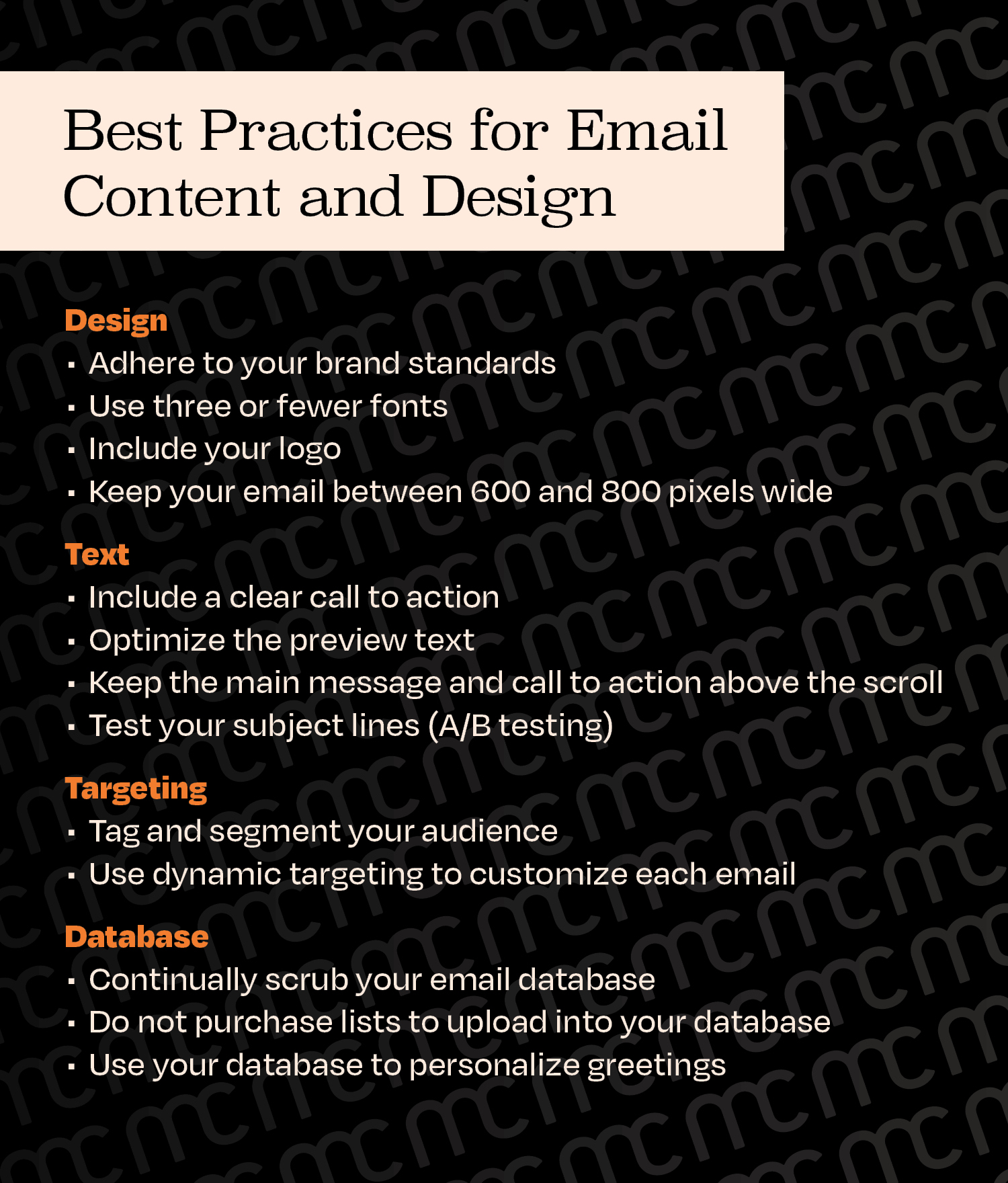
Email marketing continues to be a potent tool for associations, capable of driving significant engagement and conversions. Adhering to best practices in email design, targeting and database management is essential for maximizing the impact of your campaigns. Metrics such as open rates, click-through rates and conversion rates are critical in measuring success and refining future strategies.
Digital marketing presents unparalleled opportunities for trade associations to connect with and expand their membership. By deeply understanding their audience, strategically choosing digital platforms, creating compelling content and effectively utilizing email marketing, associations can strengthen their community and advance their mission in the digital age. Embracing these strategies not only enhances communication with the audience but also sets the stage for sustained growth and success.
2023 has been a pivotal year for Martin Communications, marked by changes and achievements that underscore our dedication to delivering unparalleled services to our clients.
Strategic Leadership for a New Era
The appointment of Barb Martin as president heralded a fresh perspective on leadership. Under her guidance, we have refined our strategies to better align with the evolving needs of our clientele, ensuring that we remain at the forefront of marketing innovations.
“In this new chapter at Martin Communications, we’re focusing on what matters most: being innovative and effective for our clients. We’re not just keeping up with changes; we’re at the forefront, leading the way. We aim to stay ahead, providing our clients with the best strategies to succeed in their markets.”
Barb Martin, President
Celebrating Diversity and Inclusion
Our certification as a diverse business by the Women’s Business Enterprise National Council (WBENC) and the Pennsylvania state government is not just an accolade; it reflects our commitment to creating inclusive strategies that resonate with a broader audience. This diversity in thought and approach is vital in crafting more effective and comprehensive marketing campaigns for our clients.
“In our company, having different voices, lived journeys, and ideas are important. This diversity helps us understand and meet our clients’ needs better. It’s all about making sure everyone is heard and valued, and that’s what we aim for at Martin Communications.”
Emily Marrs, Office/Finance Manager
“Winning awards isn’t just a target for us; it shows how much we care about doing great work for our clients. It’s about more than just creativity—it’s about ensuring we’re truly helping our clients succeed in every project.”
Michael Keesee, Art Director
Embracing Tomorrow
As we move into 2024, our primary focus remains on maintaining the high quality of service our clients have come to expect from Martin Communications. Building on this foundation, we’re integrating advanced technologies like artificial intelligence to enhance our marketing strategies. AI will enable us to offer more personalized, efficient solutions, keeping our clients ahead in their respective markets.
Moreover, we’re deepening our commitment to diversity and inclusion. We aim to create more resonant and effective marketing campaigns by embracing diverse perspectives and backgrounds. This approach is not just about being socially responsible; it’s about being more innovative and attuned to the global marketplace.
Finally, our team is set to expand, bringing in fresh talent and ideas. This growth is critical in supporting our clients’ evolving needs, ensuring we continue offering innovative, tailored solutions in an ever-changing business landscape.
“We’re heading into 2024 with great enthusiasm at Martin Communications. It’s a time of growth and innovation for us. It’s an opportunity to combine technology, diversity, and fresh talent with our long history of outstanding service to provide even better results for our clients.”
Barb Martin, President
In 2024, Martin Communications is all about blending quality, innovation, and diversity to drive success for our clients in exciting new ways.
Thank you to our clients and vendors for being integral to our journey. Let’s make 2024 a year of even greater achievements and successes.
In the modern advertising landscape, inclusive marketing defines the essence of being a brand with a vision. It transcends the concept of surface-level diversity to weave the principles of diversity, equity, inclusion, and belonging into the very fabric of a brand’s narrative.
Inclusive marketing is a deliberate strategy that moves beyond the mere inclusion of diverse faces in a campaign. It’s about purposefully recognizing who has been traditionally included in the marketing narrative and who has not—and making intentional choices to remedy this imbalance. It’s about widening the circle and shifting the center, ensuring that no single dominant lens dictates the story being told.
At its heart, inclusive marketing serves three foundational purposes:
Reflecting Community Diversity
True inclusivity in marketing means crafting messages that resonate with the real-world diversity of communities. It’s about understanding the cultural, ethnic, and personal identities that shape consumer experiences and reflecting these in every campaign.
Elevating Underrepresented Stories
Inclusive marketing is about giving a platform to those who have historically been sidelined. By doing so, it not only brings equity to the forefront but also enriches the marketplace of ideas with fresh and yet deeply personal narratives.
Confronting Cultural Biases
Traditional marketing has often perpetuated a homogenous view of society. Inclusive marketing shatters this by questioning and confronting ingrained cultural biases, thus fostering a broader, more empathetic understanding of the varied human experience.
Authenticity is critical in this approach—it’s not about including everyone for appearances. It’s about being purposeful in representation and inclusive by design, not by default. In doing so, a brand can craft an inclusive message that resonates with genuine intent.
Economic Rational
Inclusive marketing isn’t merely a moral compass for brands; it translates directly into tangible business results. Companies that have harnessed the power of representative advertising have seen significant financial benefits. According to the American Marketing Association (AMA), brands with the most representative ads observed an average stock gain of 44%. This statistic underscores the financial upside of inclusive marketing.
The economic rationale for incorporating inclusive practices early in the design and development process is equally compelling. Smashing Magazine highlights a stark reality: the business cost of amending a design after its completion can be a staggering 100 times higher than if inclusivity had been considered from the outset. This is a powerful incentive for brands to weave inclusivity into the fabric of their marketing campaigns from day one.
The consumer response to inclusive marketing is overwhelmingly positive. The AMA reports that 64% of consumers are more likely to purchase immediately after viewing diverse advertisements. This demonstrates that inclusivity in marketing can directly influence buying behavior.
Moreover, companies embracing inclusion and inclusive language have been shown to achieve 39% higher customer satisfaction, according to the Inclusive Language Handbook. This links inclusive practices to immediate sales and long-term customer loyalty and satisfaction.
Generational shifts further underscore the importance of inclusive marketing. A significant 49% of Gen Z consumers in the US have discontinued purchases from brands that failed to align with their values, as revealed by Microsoft’s research on “The Psychology of Inclusion and the Effects in Advertising.” This highlights the burgeoning expectation for brands to authentically represent and uphold the values of a diverse consumer base.
Learning More About Your Local Community
In inclusive marketing, a deep and nuanced understanding of the community you serve is indispensable.
The U.S. Census Bureau plays a pivotal role in this aspect. Tasked with the mission to serve as the leading provider of quality data about the nation’s people and economy, it equips marketers with essential insights into the fabric of their local communities.
Marketers can discern the demographic and economic characteristics that define a locale by engaging with census data. For instance, in the central Pennsylvania market, where 25% of residents speak a language other than English, marketers are provided with a clear directive to craft multilingual outreach initiatives. This adaptation ensures that messaging is not only accessible but also relevant to a linguistically diverse audience.
Beyond language, the Census Bureau’s data sheds light on the varying capabilities of a population. In the Harrisburg, Pa. region, an understanding that 3% of the population has a vision impairment, 9% has an ambulatory difficulty, and 8.5% has cognitive difficulties mandates a more thoughtful marketing approach. It necessitates content that is not only visually accessible but also mindful of mobility and cognitive experiences, ensuring all members of the community can engage with the marketing content.
Such granular insights are crucial for marketers aiming to align their messaging with the lived realities of their audience. Whether through alternative formats for those with visual impairments, easy-to-navigate layouts for those with mobility issues, or clear and simple language for those with cognitive difficulties, the goal is to create marketing that is seen, heard, and understood.
Accurate and timely data is the bedrock of effective inclusive marketing. While the U.S. Census offers invaluable insights into the demographic makeup of a community, its decennial nature means that the data might not always reflect the most current trends. To bridge this gap, marketers can turn to ongoing data collection services that offer more frequent updates and detailed consumer behavior analytics.
Nielsen Scarborough is a prime example of such a service, providing granular data on shopping patterns, media usage, and lifestyle trends across various demographics. Specializing in local and national consumer research, Scarborough’s coverage of over 100 local markets in the U.S. makes it an indispensable resource for marketers aiming for precision and relevancy in their strategies.
Consider the veteran audience in central Pennsylvania as illustrated by Scarborough’s data. At first glance, most of this group appears to be aged 60 and above. However, a deeper dive into the data reveals that a significant portion, 35%, falls within the 25-59 age range. Such nuances are critical, mainly when these age brackets exhibit distinct media consumption habits.
By leveraging Scarborough’s detailed analytics, marketers gain a richer, more nuanced understanding of their audience. This allows for the creation of targeted marketing campaigns that resonate with specific community segments, addressing their unique preferences and behaviors. For instance, understanding the media habits of the younger veterans in Harrisburg could inform decisions on which platforms to use for advertising, what type of content would be more engaging, and what times are optimal for messaging.
Such targeted insights ensure that marketing efforts are inclusive and effectively tailored, maximizing impact and engagement within the community. For a comprehensive approach, combining the broad demographic overview provided by the U.S. Census with the detailed consumer behavior analysis from Scarborough creates a robust framework for understanding and engaging with local markets.
To complement the demographic data gathered from sources like the U.S. Census and Nielsen Scarborough, customer surveys and community-oriented focus groups serve as the microscope for finer details of the community to be observed and understood. The importance of diversity in these qualitative research methods cannot be overstated, as it contributes to the depth and breadth of insights in the following ways:
Representativeness
Diversity in focus groups and survey respondents is crucial for capturing a cross-section of the community. This ensures that the insights and feedback reflect the larger population, enabling marketers to design campaigns that speaks to a broader audience, not just a select segment.
Multiple Perspectives
Individuals from varied backgrounds bring unique viewpoints shaped by their distinct experiences. Such a rich tapestry of perspectives can uncover a broader range of needs and preferences, highlighting opportunities that might otherwise be missed in a less diverse setting.
Avoiding Bias
A homogeneous group is often prone to “groupthink,” where similar opinions reinforce each other, eclipsing alternative thoughts. A diverse group mitigates this risk, offering a more balanced and comprehensive array of feedback and safeguarding against bias that could skew marketing strategies.
Inclusivity
Ensuring inclusivity in focus groups and surveys is about fairness and thoroughness. It allows for the voices of underrepresented or marginalized groups to be heard and considered, fostering genuinely inclusive marketing approaches.
Innovation
The potential for innovation lies at the intersection of different life experiences and perspectives. When diverse groups come together, exchanging ideas can spark creativity and lead to breakthrough concepts, setting a company apart in a competitive market.
Marketers can attain a deeper, more authentic connection with their community by prioritizing diversity in customer surveys and focus groups. The insights gained from these engagements are invaluable, shaping marketing strategies that are as effective as they are inclusive, ensuring that every segment of the community sees themselves reflected in the brand’s messaging.
Representing Your Audience Through Language
Language wields the power to include or exclude, to respect or offend. Its usage in marketing is not just about communication—it’s about connection. As the Inclusive Language Handbook notes, “Consistent use of inclusive language can have a significant positive effect on a company’s culture, performance, and profitability.” To harness this power, there are several guidelines to consider:
Put People First
Utilize person-first language to emphasize the individual rather than their condition or characteristic. For instance, “a person with diabetes” is preferred over labeling someone “a diabetic,” thus acknowledging their humanity before their health condition.
Use Universal Phrases
Idioms, acronyms, and jargon can be exclusionary. Phrases like “it’s chockers in here,” an Australian slang for “it’s extremely full or crowded,” may baffle those unfamiliar with the expression. Strive for clarity and universality in language to ensure broad comprehension.
Recognize the Impact of Mental Health Language
Casual misuse of mental health terms diminishes their seriousness. Avoid using clinical terms to describe normal variations in mood or behavior, which can trivialize real and significant health conditions.
Use Gender-Neutral Language
Replace gender-specific terms with inclusive alternatives, such as “humanity” instead of “mankind” or “police officer” in place of “policeman.” This simple shift can make language more inclusive of all genders.
Be Thoughtful with Imagery and Symbolism
Symbolic language often carries hidden connotations. Instead of saying “a black mark” on someone’s record, opt for “a stain” or “blemish,” which have less historical and cultural baggage.
Clarify and Communicate
When in doubt, ask. Most people appreciate the opportunity to provide the language that makes them feel seen and respected. It is a no-cost strategy that can foster more robust, more respectful relationships with all stakeholders.
Embracing these guidelines enhances the inclusivity of marketing efforts and can lead to a more positive corporate culture and improved stakeholder relationships. In the end, the conscious use of language is not merely a matter of policy—it’s a practice that can elevate a brand to new levels of engagement and trust.
When marketers embrace inclusive language, they may sometimes face resistance to change. It’s important to remember that the evolution of language is supported by expert consensus. For example, since 2019, all four major English language style guides—Associated Press, Modern Language Association, American Psychological Association, and The Chicago Manual of Style—have endorsed using the singular “they.” This move underscores a broader societal shift toward recognizing and respecting the fluidity of gender identity.
Here’s how marketers can stand firm in their inclusive language choices:
When facing skepticism, point to the recommendations of respected style guides, which reflect contemporary usage and support inclusivity.
Share the rationale behind the changes, which often includes a desire to respect individual identity and avoid assumptions.
Emphasize the positive impacts of inclusive language, such as improved customer relations, brand perception, and employee satisfaction.
Cite studies and industry examples that demonstrate the effectiveness of inclusive language in reaching broader audiences.
By leaning on the authority of established style guides and the evidence of their acceptance, marketers can confidently advocate for language that is accurate and aligned with current best practices. This approach positions a brand as a leader in inclusivity and demonstrates a commitment to evolving with the times and respecting all consumers.
Representing Your Audience Through Imagery
Guided by the principle that no single image can encapsulate the breadth of diversity within any demographic, marketing imagery must be created with sensitivity and intent. Below are guidelines to ensure that imagery aligns with inclusive representation:
Diverse Representation
Recognize that diversity is multifaceted and cannot be portrayed through a single individual. Aim for a tapestry of images that reflect the variety within demographic groups, capturing a broad spectrum of individuals and their experiences.
Positive Depictions
Focus on creating uplifting and positive representations, particularly of underrepresented groups. Ensure that these portrayals avoid reinforcing stereotypes and instead celebrate the richness and complexity of diverse communities.
Adaptability to Change
Stay attuned to the evolving cultural landscape and be willing to revise imagery in response to new understandings and perspectives. A commitment to change is a commitment to continuous improvement in representation.
Avoiding Cultural Appropriation
Ensure authenticity and respect by avoiding cultural appropriation. This can be achieved by involving a diverse group of reviewers and creatives at every stage, from conception to final approval.
Inclusive Creative Teams
Build creative teams as diverse as the audiences you wish to reach. The variety of perspectives within the team can inform more nuanced and respectful imagery, leading to more authentic representations.
By adhering to these guidelines, marketers can craft imagery that appeals visually and resonates on a deeper level with audiences from all walks of life. This approach to imagery is not just about avoiding missteps; it’s about taking proactive steps toward a more inclusive and respectful visual narrative that aligns with the progressive values of a brand.
Building Accessible Content
Creating accessible content for all users ensures equal access to information and functionalities. The following is a checklist to start building accessible digital content:
Markup
HTML Headings: Utilize H tags effectively. They provide structure for the content, making it easier for people using screen readers to navigate the document.
Page Titles: Use the Title tag to give each page a meaningful and accurate title. This helps users understand the context and purpose of the page.
Visual Appearance
Image Independence: Ensure your page is fully functional even when images are not displayed. This assists users who use text-based browsers or have images turned off for speed or bandwidth reasons.
Zoom Compatibility: Design your pages to remain legible and usable when the content is enlarged up to 200%. This is crucial for users with visual impairments.
Dynamic Content
Alt Text for Images: All images should have alternative text that describes the image content or function. This description is vital for screen reader users.
Multimedia Accessibility: Provide audio transcripts, captions, and sign language translations for videos. This ensures that content is accessible to users with hearing impairments.
Forms
Confirmation and Undo Options: Allow users to confirm their actions and provide a way to reverse them if necessary. This prevents accidental submissions or changes.
Text Error Notifications: Present all error messages in text form, not as images, so that they are readable by screen readers and understandable without visual cues.
Testing
Comprehensive Testing: Conduct thorough testing with real users, including those with disabilities. Automated testing tools can help identify issues, but human testing is essential to understand users’ practical challenges.
Learn more by visiting the accessibility checklist available at NorthTemple.com. By adhering to accessibility principles, you ensure that your content is not only accessible but also offers a better user experience for all. Remember that accessibility is not a one-time task but an ongoing commitment to inclusivity in the digital space.
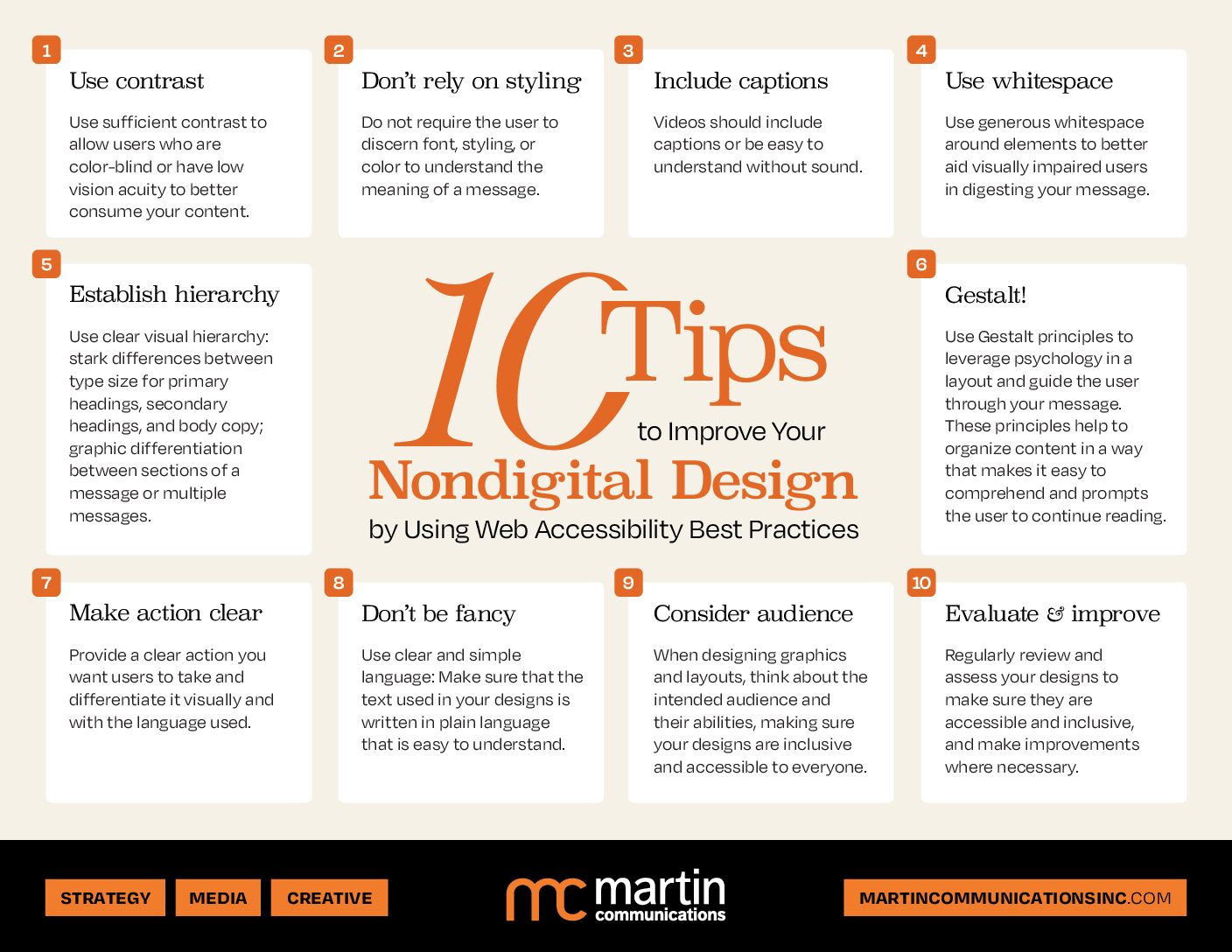
Downloadable Guide: 10 Tips to Improve Your Design
While much of the focus on accessibility is on digital content, applying the same principles to nondigital designs is essential. The following tips are derived from web accessibility best practices but are equally crucial for print and other physical media:
Contrast and Color
Use high-contrast color schemes to assist users with color blindness or low vision. Ensure that information is not conveyed by color alone.
Font and Styling Clarity
Choose fonts and styles that are easy to read. Avoid requiring users to use color or font style to understand the content.
Captions for Videos
Provide captions for all videos to ensure that content is accessible to users with hearing impairments or those in sound-sensitive environments.
Whitespace
Incorporate generous whitespace around elements, aiding users with visual impairments in navigating and comprehending your content.
Visual Hierarchy
Establish a clear visual hierarchy with distinct typography for headings and body copy and use graphical elements to delineate sections.
Gestalt Principles
Apply principles of visual perception to organize content in a way that naturally guides the viewer through the layout, such as the ‘L’ shape or ‘Z’ pattern reading paths.
Clear Call to Action
Clearly define the action you want users to take using visual distinction and directive language.
Simple Language
Ensure that all text is written in plain language to facilitate understanding.
Audience Consideration
Design with your intended audience, considering their abilities and ensuring inclusivity.
Continuous Improvement
Regularly evaluate and refine your designs for greater accessibility and inclusivity, staying abreast of best practices and user feedback.
Accessible design is not a static goal but a dynamic, continuous improvement process. By applying these principles, designers, and marketers can create content that is not only universally accessible but also offers a more engaging and inclusive experience for all users.
Building a Responsive and Inclusive Team
A team that reflects the diversity of its audience is more likely to produce work that speaks authentically to its audience. Building a responsive and inclusive group involves more than hiring practices; it requires an ongoing commitment to growth and learning. Here’s how organizations can foster such a team:
Leverage Internal Insights
Utilize the lived experiences of internal stakeholders to enrich campaigns. They can provide valuable perspectives that might not be present within the creative team alone.
Avoid Tokenism
Ensure that representation is meaningful rather than symbolic. No single person can represent the entirety of a diverse group.
Expand with Freelancers
Grow the diversity of your team by bringing in freelancers, especially for projects that require a specific understanding or cultural nuance that your team may lack.
Empower Team Members
Give team members the autonomy to propose and make changes. This encourages ownership and accountability for inclusive practices.
Learn from Mistakes
When errors occur, involve the team in understanding what went wrong and establishing protocols to prevent similar issues in the future.
Provide DEI Training
Offer ongoing training to update everyone on diversity, equity, and inclusion issues and best practices.
Encourage Open Dialogue
Create a safe space for open communication where team members can share diverse perspectives and ideas without fear of judgment.
Cultivate Respect
Build a culture where everyone is treated with respect and dignity and all voices are valued equally.
Encourage Empathy
Foster empathy within the team, prompting members to consider and understand the perspectives of various groups.
Celebrate Diversity
Acknowledge and celebrate the different backgrounds and perspectives each team member brings.
By incorporating these practices, an organization can build a team that is not only technically skilled but also culturally competent and responsive to the diverse world it serves.
Inclusive marketing isn’t just a strategy; it’s a commitment to reflect and respect the full spectrum of humanity in our brand narrative. Now is the time to embrace this path to enrich our brand and contribute positively to an increasingly diverse world. With each step toward inclusivity, we build a stronger, more connected community around our brand.
Don’t let the nuances of inclusive marketing be a roadblock. Reach out to Martin Communications and let us empower your brand to connect more deeply, engage more meaningfully, and grow more inclusively. Contact us today, and let’s craft a world of marketing that celebrates every voice.
Additional Resources
The Accessibility Checklist I Vowed I’d Never Write, NorthTemple.com
Authentically Inclusive Marketing: Diverse Lenses, Emerging Approaches, AndHumanity
Artificial intelligence (AI) has emerged as a transformative tool in the modern business world. Its tentacles spread wide and far, from chatbots for customer support to predictive analytics for market trends. However, with its myriad benefits come ethical, logistical, and operational considerations. For small to mid-size companies, striking the right balance is essential to ensure that AI is an enabler rather than a disruptor.
Understanding AI’s Role
Before diving headfirst into AI, companies must identify the problems they are trying to solve. Is it enhancing customer interaction? Streamlining internal processes? Generating new ideas for sales and promotion? Or predicting market fluctuations? By narrowing down the focus, businesses can avoid unnecessary costs and complexities.
Suggested Use Case: For a retailer, using AI to forecast inventory needs based on historical sales data and upcoming local events can ensure that they neither overstock nor run short.
Ethical Considerations
Every company, regardless of size, should have ethical guidelines for AI usage. This encompasses data privacy, transparency in AI decision-making, and ensuring AI doesn’t perpetuate biases.
“AI is an incredible advancement, but at Martin Communications, we recognize its strength lies in how we use it. Our ethical guidelines ensure that AI serves as an extension of our team, not a replacement. It’s our commitment to use this technology in a way that amplifies potential, aligns with our core values, and continues to foster the deep relationships we’ve built over the years. AI might be the tool, but our shared principles and dedication drive the narrative.” Barb Martin, President, Martin Communications
Suggested Use Case: A hiring firm might use AI to sift through resumes. Their guidelines should ensure the algorithm doesn’t favor or discriminate against candidates based on age, gender, or ethnicity.
Start Small and Iterate
Small to mid-size businesses (SMBs) don’t need to invest in large-scale AI projects immediately. Starting with smaller projects, gauging their effectiveness, and iterating based on feedback can lead to more refined and successful AI integrations.
Suggested Use Case: A local café could introduce a chatbot on its website to answer frequently asked questions about menu items, hours of operation, or special events.
AI as a Collaborative Tool, Not a Replacement
A common misconception is that AI threatens human jobs. AI’s primary role in small to mid-size businesses is as a support mechanism. It takes over mundane, repetitive tasks, allowing employees to focus on more strategic, creative aspects of their roles. Instead of replacing people, AI amplifies human potential, making teams more efficient and effective.
“In the world of art and design, inspiration has countless sources. With AI, we’ve added another brush to our kit that broadens our visual storytelling capabilities. It’s not about machines taking over creativity; it’s about enhancing our vision, refining our ideas, and pushing the boundaries of what we can visualize. AI is a collaborative partner at Martin, ensuring our creative spirit remains undiminished and ever-evolving.” Michael Keesee, Art Director, Martin Communications
Suggested Use Case: An event management company might use AI to handle logistical details like scheduling, venue comparisons, or attendee management. This frees the human team to focus on event themes, client interactions, and other high-value tasks requiring a human touch.
Employee Training and Engagement
AI’s introduction should be accompanied by staff training. This enables employees to utilize the new tools effectively and emphasizes the complementary nature of AI and human roles, mitigating fears and fostering collaboration.
Suggested Use Case: A community bookstore could train its staff to use an AI-powered recommendation system, enhancing customer experiences by offering titles based on previous purchases and preferences.
Continuous Review and Feedback Integration
AI isn’t a “set it and forget it” tool. SMBs should have mechanisms in place to regularly review the tool’s performance, gather feedback from stakeholders (both internal and external), and make necessary adjustments.
“Consistent review and feedback are crucial with AI. Like any strategy, its effectiveness lies in our ability to adjust and refine based on real insights.” Barb Martin, President, Martin Communications
Suggested Use Case: A financial consultancy firm might use AI to predict market trends. Regular review sessions could assess the accuracy of these predictions and adjust parameters accordingly.
Collaborate and Learn
Engaging with AI experts, attending workshops, or collaborating with tech firms can provide valuable insights. SMBs should always be on the lookout for learning opportunities to stay updated and ensure they’re leveraging AI’s potential responsibly.
Suggested Use Case: A regional political advocacy group might collaborate with an AI specialist to analyze social media trends and public sentiment. This partnership could enable them to tailor campaigns more effectively, engage with constituents on pressing issues, and monitor real-time shifts in public opinion.
AI is no longer the exclusive domain of tech giants. With the right approach, guidelines, and commitment to ethical and responsible use, small to mid-size companies can harness AI’s power to boost efficiency, improve customer experience, and drive growth. It’s a tool to elevate human potential, ensuring that businesses thrive and maintain their unique human touch.
Ready to explore the potential of AI for your business without losing the personal touch? At Martin, we bridge the gap between technology and authentic relationships. Let’s chat about how we can help your business embrace AI responsibly.
Advertising is not a linear process; it’s a complex amalgam of interconnected specialties — strategic planning, creative development, media buying, and analytics, to name a few. Among these, one role often stands out for its cross-disciplinary influence and importance: account management. Good account management contributes significantly to the overall success of advertising campaigns, shaping outcomes and ensuring client satisfaction.
The Conduit of Communication
An Account Manager is the essential bridge between the client and the advertising agency. They communicate the client’s needs and objectives to the internal design and media teams and translate the agency’s ideas and strategies to the client.
For instance, when Pennsylvania Power and Light (PPL) wanted to increase awareness of its cost-saving program, the Account Manager facilitated the alignment of the client’s vision with the advertising team’s creative execution. This role of the Account Manager ensures that the client, the agency, and any outside vendors work harmoniously toward a common goal, avoiding costly miscommunication and misunderstandings.
The Architect of Strategy
Account Managers often play a significant role in crafting the strategic direction of campaigns. They understand the client’s business, industry landscape, and target audience — crucial insights that shape the campaign’s trajectory when bringing together design and media.
For instance, the success of the Pennsylvania CASA awareness campaign can be attributed to the strategic decision to focus on south-central Pennsylvania. This strategic decision, guided by the Account Manager’s understanding of the client’s goals, played a crucial role in the campaign’s outcome.
The Custodian of Client Relationship
Beyond managing campaigns, Account Managers are also responsible for nurturing the relationship between the client and the agency. They ensure the client feels heard, understood, and valued, ultimately contributing to long-term business relationships.
Our work with the Pennsylvania Psychiatric Institute (PPI) shows an example of this. The Account Manager’s ability to understand and cater to the client’s specific needs resulted in a dramatic increase in their online engagement, demonstrating the significant impact a good client relationship can have on a campaign’s success and the community the organization serves.
The Guide Through Rapid Change
In the ever-evolving world of advertising, quick adaptability is vital. Account Managers, with their holistic perspective, are often instrumental in identifying the need for rapid changes and are at the forefront of implementing these adjustments.
The advertising campaign for Community LifeTeam‘s EMT program illustrates this role effectively. Faced with a time crunch, the Account Manager swiftly devised and coordinated a strategic plan within the constrained timeline. Despite a small budget and a large geographic and demographic target, their efficient strategy led to an overwhelming response, closing the campaign within seven days due to the surge in applications. This feat exemplifies the critical role of the Account Manager in navigating fast-paced changes while ensuring the campaign’s success.
The Advocate of Empathy
Effective advertising requires a deep understanding of and empathy for the target audience, something Account Managers excel at. By representing the consumer’s voice within the agency, Account Managers help create campaigns that resonate more deeply with the audience.
In the wake of the challenges faced by teachers during the shift to long-distance learning, the empathy and understanding of our Account Managers helped create a thoughtful campaign acknowledging and appreciating educators’ efforts. This campaign resonated with the audience and successfully addressed a sensitive social issue, underlining the power of empathy in advertising.
Account Management is more than just a liaison role; it’s a multifaceted function that weaves various threads of an advertising campaign into a successful tapestry. At Martin Communications, we take immense pride in our Account Management team, recognizing their pivotal contribution to our campaigns’ successes. Through their efforts, we continue to deliver campaigns that not only meet but often exceed our clients’ expectations, reinforcing the value of quality management and deep relationships in advertising.
If you would like to learn how our team of experienced professionals can aid your business, contact us today.
The growth of the healthcare industry in recent years has been unprecedented, and with an expanding sector comes the challenge of hiring skilled professionals to meet the rising demand. While traditional methods like job postings, employee referrals, and career fairs remain valuable, they may not always suffice in this competitive landscape. Therefore, healthcare organizations are exploring innovative ways to engage and recruit high-quality candidates. Let’s delve into some of these alternative methods revolutionizing healthcare staff recruitment.
“Exploring new recruitment strategies is not merely an optional venture in today’s competitive healthcare landscape. It’s a necessity,” said Martin Communications President Barb Martin. “Embracing innovative approaches enables us to connect our healthcare clients with diverse, top-tier talent in meaningful ways, fostering a dynamic workforce that’s equipped to adapt, evolve, and drive forward the mission of delivering exceptional patient care.”
Leveraging Social Media for Recruitment
Social media has emerged as an impactful tool for connecting with a broader audience. Healthcare organizations can capitalize on platforms like LinkedIn, TikTok, or Facebook to endorse their brand and advertise job openings. Engaging content such as infographics, videos, and blog posts can be leveraged to reflect the organization’s culture, benefits, and career opportunities, attracting individuals who value a robust online presence.
Association Partnerships
Medical associations usually have a broad membership base that includes diverse healthcare professionals. By advertising job opportunities through these associations, healthcare organizations can reach potential candidates who are actively engaged in their field and who might not be reached through more general recruitment methods. Some associations have job boards or newsletters where organizations can post job opportunities, others may host career fairs, and some will allow the purchase of their membership list to be used for direct contact through email or mail.
Boosting Employee Referral Programs
Employee referrals have always been an integral part of recruitment strategies. Incentivizing these referrals can encourage employees to recommend high-quality candidates who might be a cultural fit and perform effectively. Incentives could include bonuses or extra vacation time, making this approach beneficial for current employees and the organization.
Targeted Advertising for Specific Audiences
Through targeted advertising, organizations can direct messaging about open positions to their desired audiences. These options can be targeted in two different ways. One, leveraging third-party data, qualified candidates actively looking for work in the chosen field can be reached and exposed to a message promoting the open position. This targeting method can be deployed through standard display banners, targeted email, or video. Two, competitor locations can be targeted using geo-fencing technology to expose their employees to recruitment messages to lure them away.
Building a Strong Employer Brand
Promoting an organization as a great workplace is vital in attracting top talent. Showcasing the unique culture, values, and benefits can set an organization apart from the competition and lure the best professionals in the field. Also, when attracting talent from outside the market, consider promoting the highlights of your community (arts, entertainment, education, etc.).
Promoting Diversity and Inclusion
Diversity and inclusion initiatives are integral to healthcare organizations today. They contribute to a more expansive candidate pool and foster a welcoming environment for all employees. A diverse and inclusive workplace resonates with social responsibility, enhancing the organization’s brand. However, more than the mere existence of these initiatives is needed; they must be actively promoted and communicated internally and externally.
Digital Conference Engagement
Medical conferences bring together passionate, driven professionals who are deeply invested in their field. Using geofencing technology at such events, healthcare organizations can target potential candidates actively seeking to advance their knowledge and networking in the industry. With limited travel budgets for human resource teams, geofencing conferences enable an extension of the healthcare systems presence to a wide list of conferences, both those attended and not.
Investing in Training and Development Programs
Offering opportunities for employees to learn and grow signifies an organization’s commitment to long-term success. Training programs equip employees with essential skills for the healthcare industry, like advanced clinical capabilities, leadership acumen, and tech skills. Highlight the availability of these programs in job posts and through internal and external communication.
Flexible Work Arrangements
Offering flexible work options like remote work or adaptable schedules can show that an organization values work-life balance. Such arrangements can improve job satisfaction, reduce stress, and, consequently, better retention rates.
Establishing Partnerships with Educational Institutions
Collaborating with schools and universities can be an effective way to tap into new talent pools. It provides students real-world exposure through internships or co-op programs, nurturing skills vital for a successful healthcare career.
“In the quest for excellence in healthcare marketing, we must recognize that our strength lies in our people,” said Martin. “The strategies we employ to attract, engage, and retain top talent must be as innovative and dynamic as the industry itself. Each alternative method we deploy in our recruitment process represents an investment in the future of healthcare—a future shaped by diverse perspectives, enriched by continuous learning, and dedicated to the unwavering pursuit of patient care.”
Alternative methods to recruit healthcare staff are not just necessary but crucial for organizations aiming to attract and retain the best talent. From social media marketing and content creation to diversity initiatives and educational partnerships, these strategies can help organizations build a robust workforce. This, in turn, will ensure the delivery of high-quality patient care and foster innovation in this rapidly evolving industry.
Do you need assistance reinvigorating your healthcare recruitment strategy? We can help. Email Help@MC-Martin.com or complete the form on our contact page to start the discussion on how to recruit the professionals you need in your healthcare system.
Have you ever bought something just because of the packaging? There’s something about pleasing design that entices the eye and, when done correctly, places you a step above the competition.
Before beginning a design project at Martin Communications, we must understand three things: the intended audience, the message and tone, and how the piece will be used. There is a lot that goes into creating an effective design, a lot of which is unknown to most people (and even some designers!). We asked our Art Director, Michael Keesee, “What makes a good design?” and here’s what he said:
Visual balance and composition
In the Western world, we naturally process visual information in a particular way. A typical example is that we read from left to right, followed by top to bottom. Many similar principles like this must be considered when creating an effective composition, like consistent margins and spacing, the balance between shapes, and typographic hierarchy.
Knowledge of the audience
This is a critical aspect that needs to be added to the approach of many designers. You need to know the audience intimately to create something that resonates with them. This includes ethnicity, family situation, geographic area, and age. From there, the data can be cross-referenced with known design preferences for different demographics.
Awareness of cultural trends
Although a designer should always strive to create a timeless design, it’s essential to be aware of the latest trends in industries like advertising, photography, video, fashion, and interior design. This allows the designer to use, or not use, contemporary design approaches with intention and push the bounds of design aesthetics.
Once you have these answers, it’s time to trust your designer to do their thing.
Tips for working with a graphic designer
Most designers work best when focusing on completing one task at a time. This means providing all necessary details and assets at the outset to ensure they have everything they need to complete the task.
A good designer will abide by the tips listed above for what makes a good design, which makes it tricky to provide adequate direction without suppressing the skills that make a designer valuable. When working with the team at Martin Communications, we always recommend including answers to questions like:
What should the piece accomplish?
What message, approach, consequence, etc., should be avoided?
What tone or feeling should be imparted to the audience?
Make sure the designer you work with takes the time to learn the information mentioned above and think about the nuances that will set your product or service apart. Haven’t found the right designer? We’d love to get to know you and help elevate your brand.
The New Year is a great time to step back and reevaluate all you accomplished the year prior and make goals for the coming year. Performance goals for the year are a great way to stay accountable and keep business going – but when was the last time you looked at your branding?
Your brand is not only your name, but your first impression. It identifies and sets you apart from the competition. The perception your company gives off should be strong and positive, from your logo to your mission statement and throughout all marketing communications. A fresh, consistent style that represents the brand’s unique character will help to attract customers and build trust. Think about it: if you had to choose between two vendors, would you go with the one whose website is stuck in the past, or the one with a more contemporary look and feel? Even if the first company outperforms the latter, the lack of update will make anyone think twice. Updated and consistent branding increases how professional your business appears.
“The real power of a good brand identity is when it speaks to your brand’s personality, mission, and value in your market, making your business more memorable in the minds of consumers.”
Michael Keesee, Art Director, Martin Communications
Most businesses rebrand every seven to ten years. A rebrand is more than just updating your logo; and there are several items to consider if it’s the right time to do so.
1. Audience
Has your audience changed since you started your business?
Your main customer group could have started as one demographic, but through the years changed to another entirely. From age ranges to customer values, purchasing habits can change over time, transforming your core demographic along with them.
If you are concerned your brand isn’t resonating with your audience, you’ll want to figure out a better way to connect to them. From design elements to your brand voice, minor tweaks can help you better speak to your target demographics.
2. Change
Has your business changed its core offerings since it began?
If your business is in a different place from where you started, you might need to reposition yourself in the market to meet the expectations of potential buyers.
Maybe you need to change your name to something more inclusive or update your messaging so customers coming across your business better understand all you offer.
3. Growth
Have you outgrown your brand – not just looking at where you are today – but where you want to be in the future? Are you trying to expand or target a new customer group?
When expanding, be sure to ask yourself: Does my brand resonate with a wider demo group? Will it make sense outside of my current market?
Rebranding can help you prepare your business for a new target market, allow you room for your business to grow, and ultimately earn trust from new customers.
4. Outdated
How long ago was your last rebrand? The most obvious sign that it’s time is if your brand is outdated.
Unfortunately, in our fast-paced world, things get old quickly. Industries evolve, and you want to avoid being considered lackluster and outdated, especially compared to your competitors.
To stay on top of what your competitors are doing, keep an eye on the latest news in your industry and on occasion, what your competitors’ branding looks like – have they updated anything lately? If you feel like you’re falling behind, rebranding can help you regain ground.
5. Reputation
Scandals or bad reviews can be hard blemishes to remove from the public eye. If there’s no reasonable way of righting the situation, a rebrand may offer an easier way to start over than trying to sort out the existing problems.
Smaller brands can also unknowingly infringe on more prominent brands with similar names or logo designs . As a small company grows, it can catch the attention of larger brands that may claim ownership of certain graphics, colors, or wording. Rebranding can save you from the fees and time commitment of going through the legal process.
If one or more of the items above apply, chances are it’s time to rebrand. However, a complete rebrand may not be necessary. Sometimes a few simple updates are just what your company needs. Consult a marketing agency to find out what’s best for you and your company’s situation.
Tell us about your challenges, your hopes, and your expectations. We’d love to help you better connect with your audience, so schedule a rebranding meeting with us today!
Out-of-home (OOH) advertising, in particular billboards, provides an opportunity to reach large swathes of consumers with an always-on tactic.
It is essential to remember that not all boards and locations are created equal. When choosing your next spot, consider both visibility and location.
Visibility
Is the billboard on a well-trafficked highway? Or is it tucked away on the backside of a building?
When talking with your out-of-home representative, ask them the following questions:
What are the primary traffic sources near the location? How far away from the billboard are those sources?
Are there any obstructions, such as other signs or foliage, that block visibility?
When is the highest volume of traffic? If that high volume is during twilight hours, ask if the board is lit (“illuminated”) and for what hours.
If you are in the market, consider driving by the location to confirm the ease of visibility. If you are not in the market, use mapping resources like Google Maps to see a recent view or ask your contact for an updated picture of the location.
Location
Who are you trying to reach with your advertising message? Does your target line up with the audience delivered by the offered location?
While out-of-home advertising offers fewer targeting options than its digital advertising cousins, it remains essential to consider the target audience. Consider the three examples below:
If your campaign promotes a general consumer service, for example: banking services, a more expansive, general audience is most likely preferred. A billboard that is highly trafficked, and in a highly visible area, will be worth a premium to reach a broad audience.
If your campaign is a more targeted offering, for example, bankruptcy services and credit relief, a billboard with less traffic but located in an area that indexes high for service usage would be an ideal placement.
If your campaign is focused on a specific audience, such as hiring a skilled workforce, a singular location can prove extremely valuable. For example, a billboard facing your competitor’s parking lot that showcases your hiring message to their current workforce.
In our home of Pennsylvania, advertisers and marketers can find some genuinely outstanding billboards across the state. Below are five examples:
Bethlehem, PA
“This outstanding unit is situated on the Hill-to-Hill Bridge that connects Bethlehem to Allentown, this vibrant display sits on a bridge that has tremendous visibility and targets heavy commuter traffic and those traveling/commuting to area businesses, hospitals, colleges, the Wind Creek Resort Casino, Steel Stacks, ArtsQuest, and all points south in this part of the market.”
“All billboards are unique! Yes, they are a sign off to the side of a road watching the vehicles drive by. Yes, it can be the art on the board that leaps out and makes the sign more memorable. And, yes, to me, after nearly 18 years in the OOH business, they are so much more. This sign represents the community sharing upcoming events and announcing celebratory wins, small businesses wanting to expand and hire, locally, and large brands wanting to impact and educate. This particular sign is our ‘Times Square’ site near our headquarters in Chambersburg, PA. It’s visible to northbound and eastbound travelers, resting at the intersection of Route 11N and Route 997, with red lights, gas stations and restaurants. It’s nearly a true square at 20×25, and hosts 1,012 ads per day! We encourage our advertisers to showcase their art story by allocating percentages of those daily ads to key areas of their business; areas with the most momentum and areas that need attention. Beyond what you can see, this board also provides demographic and behavior impressions. Exciting!”
“For us, all billboards are interesting in their own way depending on location, size, creative, etc. However, nothing stands out more than our vertical units. We’re so used to seeing the typical 14×48 or 20×60 billboards, so when you drive past a vertical bulletin, you can’t help but look! They stand high in the sky and are structurally appealing. You won’t see them often because they’re rare – which is what makes them so unique and one of our favorites! Vertical billboards are unique to the Philadelphia landscape and stand out, providing eye-catching results for our clients along the highly sought-after Roosevelt Expressway. Our vertical unit is tall and powerful as it relates to readability and standing apart from the crowd.”
“Strategically located at the intersection of I-83 and PA-581, this billboard targets customers driving from multiple locations making it a key unit in the area. Traffic moving onto PA-581 from points south on I-83 can’t miss a message conveyed on this six-slot digital billboard. Also, those who have crossed the ‘south’ bridge from the Harrisburg area will pass by this digital bulletin making it a multi-faceted multi-customer location.
As the largest size allowed in our state, panel #88803 is 14 feet tall by 48 feet wide. Sitting high atop the highway, you cannot miss the bold bright messages displayed at 6-second intervals.
This board, located in Lemoyne Borough, will reach those headed to Camp Hill or Mechanicsburg for shopping or dining; reach those headed home from their state jobs in Harrisburg, and grasp the traveler passing through Harrisburg on their way to points south via US-15 or I-81, with exits not too far ahead.
Advertising here gets your business in front of a variety of customers coming from many different locations. If you are seeking exposure, this is the board for you!”
“Our West Conshohocken Monument creates a space engrained within the community. With a living wall, clocktower, and water wall – this is not just another billboard, but an opportunity to be part of the community landscape. This one-of-a-kind digital installation sits along the Schuylkill Expressway in West Conshohocken — reaching audiences from major highways such as the PA Turnpike, 476, 422, and 202 towards Philadelphia.”
Do you want help finding the ideal billboard to promote your message? The media team at Martin Communications can help you find the perfect spot. Reach out today and let us help you with your advertising placement.
Do you know how to build your video’s reach through paid media?
When an organization tells its story through video, it has an opportunity to create an emotional connection with the consumer. That connection creates engagement with the brand and boosts long-term favorability, but the video needs to be seen for this beneficial impact.
Often, the organic reach offered through posting videos to social channels or a brand website is not large enough to impact the target community. In those cases, we recommend turning to guaranteed options to expand the reach of a message.
CTV / OTT
Connected television and over-the-top media options bypass the traditional route of broadcast or cable to deliver content and advertising directly to consumers’ TVs through the internet. Examples of outlets reached by CTV / OTT include Crackle, Paramount+, PlutoTV, and Tubi.
Strengths
Delivered in the same large-screen format as traditional television.
Offers more in-depth targeting by location or behavior than traditional outlets.
With more consumers shifting to CTV / OTT options, the inventory is growing.
Location-Based
Using the enhanced location offered by modern mobile devices, virtual lines can be drawn on the map to target users based on their current and past locations. For example, virtual fences could be drawn around local competitors to target their frequent customers, serving their shoppers video ads to build awareness of an alternative offer.
Strengths
Reach the right customers based on their personal, geographic activity.
Less expensive on a per impression than other video options.
Detailed reporting highlights the locations generating the most interaction.
Social (paid)
From Facebook to Instagram to Snapchat to TikTok, social media users actively favor video posts, with an average of 48% more views on video than on photo posts. While brands continue to create more video content for social channels to meet this demand, they still face the persistent problem of throttled organic reach. For example, an average post on Facebook reaches only 5% of a brand’s followers.
To account for the lack of influence through organic channels, marketers can use paid promotion to boost a brand and offer an opportunity to reach beyond their followers with an engaging video message.
Strengths
With over 70% of the US population using social media, these platforms offer one of the most prominent outlets to reach general consumers.
Established social media platforms offer comprehensive targeting options, ranging from buying intention to demographic information to psychographic profiles.
Impactful video content has an opportunity to exceed its purchased audience through viral sharing.
Premium Direct
YouTube and HULU are the reigning kings of premium video platforms. Their immense size, ability to target advertising, and deliver an audience make them darlings of the advertising world.
Strengths
Direct buys with premium outlets offer the assurance of knowing where your message will appear on the internet.
With their immense size, these platforms can effectively reach most markets.
Similar to primetime television, premium video destinations provide access to engaged users who have arrived and expect to watch a video with the associated advertising.
Programmatic
Offering the broadest possible reach and the most targeting options, programmatic video advertising is the marketers’ go-to option when they encounter a difficult-to-reach or narrow audience. Programmatic advertising can target behaviors, content, credit scores, demographics, purchase history, psychographics, and more.
Strengths
A programmatic buy unlocks the largest audience with the most varied targeting options.
By using multi-site whitelists, an ad hoc network of smaller sites can be built programmatically to expand the reach of a video campaign.
Through content targeting, marketers can align their video message to the consumer as they enter the discovery phase of the purchase funnel and surround their message with similar on-page subject matter.
As consumers are watching more videos than ever before, doubling their consumption since 2018, and more delivery options come online with associated targeting vectors, video is an essential component of any marketing campaign.
If this choosing your video outreach strategy feels daunting, you are not alone. The media team at Martin Communications can help you launch a successful video campaign. Reach out today and let us help you build your customized plan.






 Bethlehem, PA
 Chambersburg, PA
 Philadelphia, PA
 Harrisburg, PA
 West Conshohocken, PA